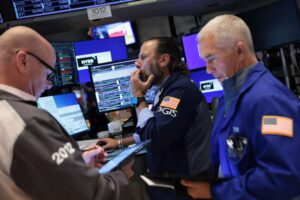


A Market Sailing Above Political Storms
On July 10, 2025, U.S. equity markets surged to new record highs. The S&P 500, Nasdaq Composite, and Dow Jones Industrial Average all posted fresh milestones—despite renewed tariff threats from President Trump affecting over 20 nations. Rather than contract, investor risk appetite expanded: bullish sentiment outpaced headline volatility.
Several underlying forces explain this paradox: structural confidence in AI-led growth, expectations of Federal Reserve rate cuts, resilient corporate earnings, and a growing belief among investors that the new tariffs may ultimately be softened or reversed.
Key Drivers Behind the Rally
1. AI & Tech Dominance
Technology shares remain the key engine behind the rally. Firms like Nvidia, Microsoft, Apple, Meta, and Amazon—the so-called “Magnificent Seven”—added an estimated $4.7 trillion in market cap in recent months. Investor demand for AI-powered services, software, and semiconductor infrastructure continues to fuel valuation growth
2. “TACO Trade”: Skepticism Toward Tariff Follow-Through
Investors increasingly rely on what’s known as the TACO trade—the belief that “Trump Always Chickens Out” of enforcing the harshest trade policies. Trump’s history of issuing threats and then delaying or walking back tariffs gives markets confidence in restraint, limiting permanent disruption
3. Supportive Monetary Policy Expectations
Federal Reserve minutes suggest a possible two-rate cut cycle by end of 2025, supported by easing inflation trends and a resilient labor market. Lower interest rates make equities more attractive than fixed-income assets, further reinforcing the bull run
4. Strategic Positioning by Retail Investors
Retail traders have leaned into buying-the-dip strategies, investing record sums—$155 billion in U.S. equities and ETFs so far in 2025—demonstrating deep conviction despite tariff-driven dips. This behavior has delivered outsized gains, especially in indices like the Nasdaq 100, which climbed roughly 31% year-to-date compared to 7.8% for the broader index
Behind the Fear: Tensions and Contradictions
Ironically, markets themselves have created tension. President Trump’s tariff announcements—on goods from copper to Brazilian imports—often generate sharp news cycles, yet investors consistently shrug off the long-term threat, leaning into growth. Analysts point to a disconnect between bond market signals (suggestive of slower growth and inflation fears) and the exuberant equity-market response, prompting observers to question which market is misreading conditions
Resilience After April’s “Liberation Day” Crash
In early April, Trump unveiled sweeping “Liberation Day” tariffs, prompting the largest U.S. equity sell-off since 2020. However, a sudden policy pause on April 9 triggered one of the most dramatic reversals ever, swinging into one of the strongest recoveries in market history. By late June, both the S&P 500 and Nasdaq fully regained earlier losses and resumed rallying to new records—even as some uncertainty remained palpable
Risks Persist: Valuation, Volatility, and Narrow Breadth
High Valuations and Elevated Greed Metrics
Current P/E ratios for the S&P 500 hover above historical norms—around 24.5× future earnings. Sentiment tools, such as the CNN Fear & Greed Index, now signal “extreme greed”, warning of potential overexuberance. Investors and strategists caution that should growth miss expectations or inflation reaccelerate, market corrections may be swift
Surging Concentration, Limited Breadth
While major indices break records, the rally lacks broad participation. Around only 50% of S&P 500 stocks trade above their 200-day moving average—below the healthy 65–80% threshold. This narrow leadership leaves the market susceptible if megacaps stumble
Tariffs Could Spur Inflation or Policy Tightening
If tariffs feed into inflation or disrupt global supply chains substantially, the Fed may delay or abandon rate cuts. Though markets currently discount implementation, escalation beyond expectations could shift sentiment rapidly from risk-on to risk-off.
Analyst Outlook: Looking to the Second Half
Goldman Sachs’ Bullish Projections
Goldman analysts remain confident despite trade volatility. They project 7% EPS growth over the coming two years and anticipate up to 125 basis points of rate cuts by 2026. Inventory buffers and cost-management strategies among large-cap companies are expected to help absorb new tariff impacts. The firm expects the S&P 500 to reach 6,700 within 12 months
Evercore’s Cautious Optimism
Evercore ISI strategist Julian Emanuel projects further gains, though he warns of elevated volatility and thin valuation margins. His year-end S&P target of 5,600 balances bullish structural drivers against cyclical risks
Implications for Investors: Strategy Amid Risk-Tolerant Markets
- Leverage thematic strength: AI, cloud, cybersecurity, and e-commerce remain core drivers. Diversified exposure to mega-cap tech can capture structural upside.
- Remain selective: Since rally breadth is narrow, rotation into undervalued or selectively beaten-down sectors (e.g. healthcare, energy) may unearth attractive opportunities.
- Manage downside risk: Use hedges (calls/puts) or maintain cash buffers to weather potential tariff shocks or sentiment reversals.
- Monitor macro cues closely: Inflation, labor data, Fed guidance, and corporate earnings may shift sentiment dynamics quickly.
Conclusion: Confidence Overcomes Chaos—for Now
2025 has brought explosive market swings, blacklist tariffs, and policy roller-coasters. Yet equity markets have consistently risen, driven by technological optimism, Fed credibility, retail momentum, and a growing belief in policy reversals before damage sets in.